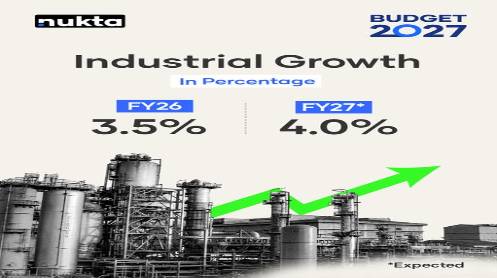
KARACHI: Pakistan’s business community has given a cautious reception to the federal budget for FY2026-27, acknowledging several tax relief measures while expressing disappointment over the absence of a comprehensive strategy to accelerate exports, strengthen manufacturing, and attract investment.
Industry representatives described the Rs18.7 trillion budget as a blend of modest incentives and missed opportunities, arguing that it lacks the bold reforms needed to drive sustainable economic growth and enhance Pakistan’s global competitiveness.
FPCCI Welcomes Relief Measures, Calls for Growth-Focused Reforms
Federation of Pakistan Chambers of Commerce and Industry (FPCCI) President Atif Ikram Sheikh noted that the economy had shown signs of stabilization, citing GDP growth of 3.7 percent, a fiscal deficit of 0.7 percent of GDP, and a 23 percent reduction in public debt-servicing costs.
He welcomed several measures incorporated from FPCCI’s recommendations, including the abolition of Capital Value Tax on foreign assets, removal of Federal Excise Duty on international business-class travel, elimination of super tax on incomes up to Rs500 million, and a reduction in the super tax rate from 10 percent to 8 percent for higher income brackets.
Additional measures appreciated by the business community include the continuation of the 0.25 percent final tax on IT exports until June 2029, a 50 percent reduction in withholding tax for filers in the construction sector, a one percent fixed sales tax regime for small retailers, and a revised minimum tax rate of 1.25 percent for exporters.
However, Mr Sheikh expressed concern over Pakistan’s weak investment and savings indicators. The investment-to-GDP ratio remains at 14.38 percent, while the national savings rate has declined to 14.13 percent. He also highlighted a rise in urban poverty from 11 percent to 17 percent.
Questioning the government’s ambitious revenue target of Rs15.26 trillion and petroleum levy collection target of Rs1.7 trillion, he warned that these measures could fuel inflationary pressures.
He also regretted that several FPCCI proposals—including restoration of the Final Tax Regime (FTR) for exporters, reductions in corporate and turnover taxes, abolition of minimum tax, and broader digitalization reforms—were not included in the budget.
“The next phase of reforms must focus on productivity enhancement, export diversification, and reducing the cost of doing business,” he emphasized.
OICCI: Budget Remains Burdensome for Formal Taxpayers
Overseas Investors Chamber of Commerce and Industry (OICCI) Secretary General M. Abdul Aleem described the budget as a serious effort formulated under difficult fiscal and external constraints.
While appreciating the Federal Board of Revenue’s achievement of collecting nearly Rs13 trillion in taxes, he observed that the burden continues to fall disproportionately on compliant taxpayers, documented businesses, and salaried individuals.
He pointed to the rapid expansion of the informal economy, noting that currency in circulation had surged from Rs9 trillion to Rs12 trillion over the past year.
Mr Aleem welcomed the rationalization of super tax, reductions in withholding and advance taxes on exports, and lower advance tax rates in the real estate sector. He also praised the proposed National Faceless Assessment Centre, which aims to reduce direct interaction between taxpayers and tax officials and improve transparency.
However, he expressed disappointment over the absence of measures to restore sales tax status or introduce zero-rating for oil refineries and petroleum marketing companies, arguing that this issue continues to delay potential investments worth $6-10 billion.
He further criticized the continuation of minimum and alternate minimum taxes, which impose liabilities based on turnover rather than profitability, and highlighted persistent concerns over delayed sales tax and income tax refunds.
KCCI: Export Sector Still Awaiting Meaningful Incentives
Businessmen Group Chairman and former Karachi Chamber of Commerce and Industry (KCCI) President Zubair Motiwala described the budget as “neither good nor bad,” saying it lacked transformative measures capable of boosting exports or improving competitiveness.
He expressed disappointment over the government’s refusal to restore the Final Tax Regime for exporters. Instead, the withholding tax rate was reduced from 2 percent to 1.25 percent and converted into a minimum tax, keeping exporters within the normal taxation system.
“This defeats the very objective of the Final Tax Regime. Exporters were seeking certainty and ease of doing business, but that objective has not been achieved,” he said.
While welcoming the reduction in super tax, Mr Motiwala criticized the budget’s silence on industrial energy costs and the growing circular debt challenge.
He also questioned how the government planned to achieve its ambitious revenue targets without significantly improving the business environment and broadening the tax base.
“It is a budget that neither hurts nor heals,” he remarked.
SITE Association Says Manufacturing Sector Overlooked
SITE Association of Industry President Abdul Rahman Fudda said the budget failed to meet the expectations of Pakistan’s manufacturing sector.
“Industry was expecting a breakthrough budget, but what it received was merely incremental relief,” he observed.
He noted that export-oriented industries, including textiles, engineering, chemicals, and processed goods, had hoped for restoration of the Final Tax Regime. Although the reduction in export withholding tax offers some relief, it falls short of addressing the sector’s broader challenges.
Mr Fudda identified three major unresolved concerns: uncompetitive electricity tariffs, the expansion of the Third Schedule of Sales Tax affecting working capital, and a stricter penalty regime that disproportionately impacts compliant businesses.
“The formal industrial sector continues to bear the burden of higher taxes, expensive energy, and delayed refunds while being expected to compete globally,” he said.
Agriculture Sector Sees Limited Support
All Pakistan Fruit and Vegetable Exporters Association Patron-in-Chief Waheed Ahmed said the agriculture sector received limited attention despite facing significant challenges.
While welcoming the reduction in minimum and advance taxes on exports, the Rs88 billion allocation under the Export Refinance Scheme, and the abolition of super tax on incomes between Rs150 million and Rs500 million, he criticized the continuation of export-related taxes and the exclusion of exporters from the Fixed Tax Regime.
He also noted the absence of incentives for alternative energy solutions that could lower production costs and enhance export competitiveness.
Mr Ahmed urged policymakers to introduce practical support measures for agriculture and horticulture, emphasizing the sector’s untapped export potential.
LCCI Calls for Stronger Focus on Investment and Industrial Expansion
The Lahore Chamber of Commerce and Industry (LCCI) described the budget as a balanced attempt at economic stabilization and documentation but stressed the need for a more robust growth-oriented framework.
LCCI President Faheem-ur-Rehman Saigol, Senior Vice President Tanveer Sheikh, and Vice President Khurram Lodhi observed that critical sectors such as industry, SMEs, agriculture, and information technology require greater policy attention due to their central role in exports, investment, and employment generation.
The chamber noted that the budget lacks a comprehensive roadmap for industrial expansion and sustainable economic growth. It also expressed concern that the allocation of Rs109 billion for dams and water reservoirs may be insufficient to address Pakistan’s growing water security challenges.
While questioning the ambitious revenue target of Rs15.26 trillion, LCCI emphasized that revenue growth should come primarily through expansion of the tax net rather than increasing the burden on existing taxpayers.
The chamber further advocated greater investment in skills development and human capital to create sustainable employment opportunities and welcomed measures such as the abolition of Section 7E, lower property transaction taxes, tax relief for salaried individuals, and initiatives aimed at improving tax administration and documentation.
Industry Seeks a Clear Growth Agenda
Overall, business leaders agreed that while the FY2026-27 budget provides some relief to taxpayers, exporters, and investors, it falls short of delivering a clear roadmap for industrial growth, export expansion, and economic transformation. They urged the government to focus future reforms on competitiveness, productivity, investment promotion, energy affordability, and broadening the tax base to achieve sustainable growth.
Story by Aamir Shafaat Khan